
Multi-channel reactions of composite nuclei
29 June-10 July
Towards high precision in multi-channel reactions of composite nuclei
Organizers: J. Kirscher (New Uzbekistan Univ., contact), M. Schäfer (Czech Academy of Sciences), E. Hiyama (RIKEN Nishina Center)
Talks and seminars during the first week (29/06 – 03/07); working group: 6-10 July
Low-energy reactions of composite nuclei are relevant for both technical and basic-science applications, and it remains a fundamental problem to reduce the uncertainties in their theoretical description. These uncertainties originate in a complicated interplay between strong and electromagnetic interactions at the low energies of interest where neither of the two can be neglected.
This project is held at a period at which the organizers deem the advancement in numerical techniques and algorithms, and the understanding of refining the nuclear interaction systematically sufficient to explore with reliable error estimates many ideas and hypotheses on how to affect reaction cross sections. To be specific in their goal, the organizers of the working group aim for theoretical predictions of reaction cross sections of composite nuclei with nucleons as degrees of freedom. Projectiles, targets, and reaction products are thus few-nucleon systems, and their formation in asymptotic states, their distortion and rearrangement in the collision process shall all be described with the same nuclear theory.
Goals of the project
1. Experimentalists and theoreticians shall identify key reactions
[i] to benchmark the accuracy of the numerical methods employed, i.e., a list of reactions measured with high precision,
[ii] to test the usefulness of interaction theory and numerical methods, i.e., reactions whose measurements are imprecisely known experimentally, and
[iii] to propose future experiments where the framework to be developed can demonstrate its predictive power and trustworthiness for applications in astrophysics, fusion research, and other fields where experiments are either unfeasible or too costly.
2. Development of a roadmap to integrate the latest advances in the understanding of systematically improvable interaction theories for systems close to unitarity, with the most sophisticated numerical techniques to solve the quantum few-body problem.
3. Transfer of knowledge and experience in overcoming the problems associated with composite multi-channel reactions when both short- and long-range Coulomb forces are relevant and act perturbatively and nonperturbatively.
4. Assess the potential of hypotheses about how to increase the yield of nuclear fusion reactions with state-of-the-art interaction theories and numerical methods.
5. Tailor the latest advances in the design of effective field theories in the form of so-called improved actions to the problem of composite multi-channel reactions.
Introductory and general talks, notes
J. Kirscher (New Uzbekistan Univ.) Towards high precision in multi-channel reaction of composite nuclei  TalkESNTintro28june2026.pdf
E. Hiyama (RIKEN Nishina Center) Gaussian expansion method and its perspective ESNT26_EHiyama.pdf
M. Schäfer (Czech Academy of Sciences) Building renormalizable very low-energy theory for few-body nuclear processes and bound states
Notes on strict perturbation theory (and on treatment of equations of the type T=KT)
Harald W. Griesshammer NoteHWGstrictPerturbationv0.8.pdf
List of talks and participants
Nir Barnea (Hebrew University of Jerusalem, HUJI)
Nuclear Responses with Neural-Network Quantum States ESNT26_NirBarnea.pdf
Betzalel Bazak (Hebrew University of Jerusalem)
Jaume Carbonell (IJCLab)
Arnoldas Deltuva (Institute of Theoretical Physics and Astronomy, Vilnius University)
Momentum-space description of few-body reactions ESNT26_ADeltuva.pdf
Pierre-Yves Duerinck (CEA DAM DIF)
d+d reactions from the Faddeev-Yakubovsky techniques (4He continuum)
Harald W. Grieβhammer (Institute for Nuclear Studies, The George Washington Univ.)
General features & bugs & problems of the EFT approach to the nuclear interaction
A guide to perturbative corrections for a variety of dynamical equations ESNT26_HGriesshammerEFTPertb.pdf
See above (general talks and notes): notes on strict perturbation theory.
Itay Horin (Hebrew University of Jerusalem)
Constraining neutron capture on unstable nuclei from beta-delayed decay data using R-Matrix theory
Liron Avraham (Hebrew University of Jerusalem)
Bosonic Helium Clusters within Neural Quantum States ESNT26_LAvraham.pdf
Wataru Horiuchi (Osaka Metropolitan University)
Glauber-model calculations using few-body wave functions ESNT26_WHoriuchi.pdf
Guillaume Hupin (IJCLab Orsay)
Ab initio predictions for thermonuclear fusion ESNT26_GHupin.pdf
Tian Jiaqi (Univ. of Tohoku)
Microscopic Description of Hypernuclear Spectroscopy via Control Neural Networks ESNT26_TianJiaqi.pdf
Rimantas Lazauskas (IPHC Strasbourg)
Application of the Faddeev (-Yakubovsky) equation formalism
Darius Likandrovas (Institute of Theoretical Physics and Astronomy, Vilnius University)
Application of machine learning to nuclear reactions ESNT26_DLikandrovas.pdf
Shoya Ogawa (Kyushu University)
Recent developments and applications of the continuum discretized coupled-channels method ESNT26_SOgawa.pdf
Matus Rojik (Johannes Gutenberg University)
Cluster EFT with α degrees of freedom and its applications to astrophysically relevant reactions ESNT26_MRojik.pdf
Avik Sarkar (Univ. of Tohoku)
Ab initio scattering calculations using nuclear lattice EFT ESNT26_AvikSarkar.pdf
Alisher Sanetullayev (New Uzbekistan University)
Investigating Halo Nuclei with IRIS ESNT26_ASanetullayev.pdf
Yasutaka Taniguchi (Fukuyama University)
Channel coupling effects in low-energy 12C+12C fusion reactions
Local participants (during a few sessions)
Lorenzo Contessi (CEA Saclay DES)
Valérie Lapoux (CEA Saclay DRF IRFU DPhN)
(An experimentalist view) Observables for nuclear reactions ESNT26_VLapouxObserv6He.pdf
ESNT talks on nuclear structure & reactions see:
+ Charge and matter distributions in nuclei https://esnt.cea.fr/Phocea/Page/index.php?id=131
+ Light nuclei between single-particle and clustering features https://esnt.cea.fr/Phocea/Page/index.php?id=123
Benchmark observables for nuclear models from direct reactions of the exotic 6,8He on proton
Program – First week TimetableESNTweekOne2026.pdf
|
Monday 29/06 |
Tuesday 30/06 |
Wednesday 01/07 |
Thursday 02/07 |
Friday 03/07 |
|
| The organizers |
Vision & experiments |
Theory foundations |
Numerical methods I |
The next generation’s view |
Numerical methods II |
|
9h-10h |
J. Kirscher |
H.W. Griesshammer |
10-11h E. Hiyama
11h30 S. Ogawa
|
9h-9h45 I. Horin |
R. Lazauskas |
| 10h-10h30 | Break | Break |
9h45-10h30 L. Avraham |
Break | |
| 10h30-11h30 | G. Hupin | M. Schäfer |
10h30 Break 11h A. Sarkar |
H.W. Griesshammer | |
| 11h30-12h30 | A. Sanetullayev | M. Rojik |
11h45 T. Jiaqi |
Y. Taniguchi | |
|
12h30-14h30 +discussions |
Lunch break | Lunch break | Lunch break |
Lunch break end 14h |
Lunch break |
| 14h30-17h Discussion sessions Morning summary moderated discussion |
Identifying key experiments | Identifying practical potential structures |
14h30
15h30
16h30-17h30 Review of existing and new approaches |
14h-15h A. Deltuva 15h-15h30 D. Likandrovas
15h30 Break P.-Y. Duerinck |
14h30-15h30 First week Review 15h30-16h30 |
Transcription of the week discussions & questions (J.K. + H. W. G.) DiscussionsReactionsJuly2026.pdf
Program – Second week - 6th to 10th July
Independent work in subgroups
Tuesday 7th July
9:15 Marc Brinkmann Introduction to large-language models
10:30 Creation of a code from scratch with claude code
|
Monday 06/07 |
Tuesday 07/07 |
Wednesday 08/07 |
Thursday 09/07 |
Friday 10/07 |
|
| Morning session | Fix working groups, code platform, and define “toy” problem |
room 135 |
room 135 | room 135 or room 101 |
room 135 or room 45 or room 101 |
|
13-14h30 +discussions |
Lunch break |
Lunch |
Lunch |
Lunch |
Lunch |
| Afternoon session |
Independent work in subgroups Room 135; Room 101 + room 45 on Monday & Friday afternoon |
||||
| Problems/obstacles | |||||
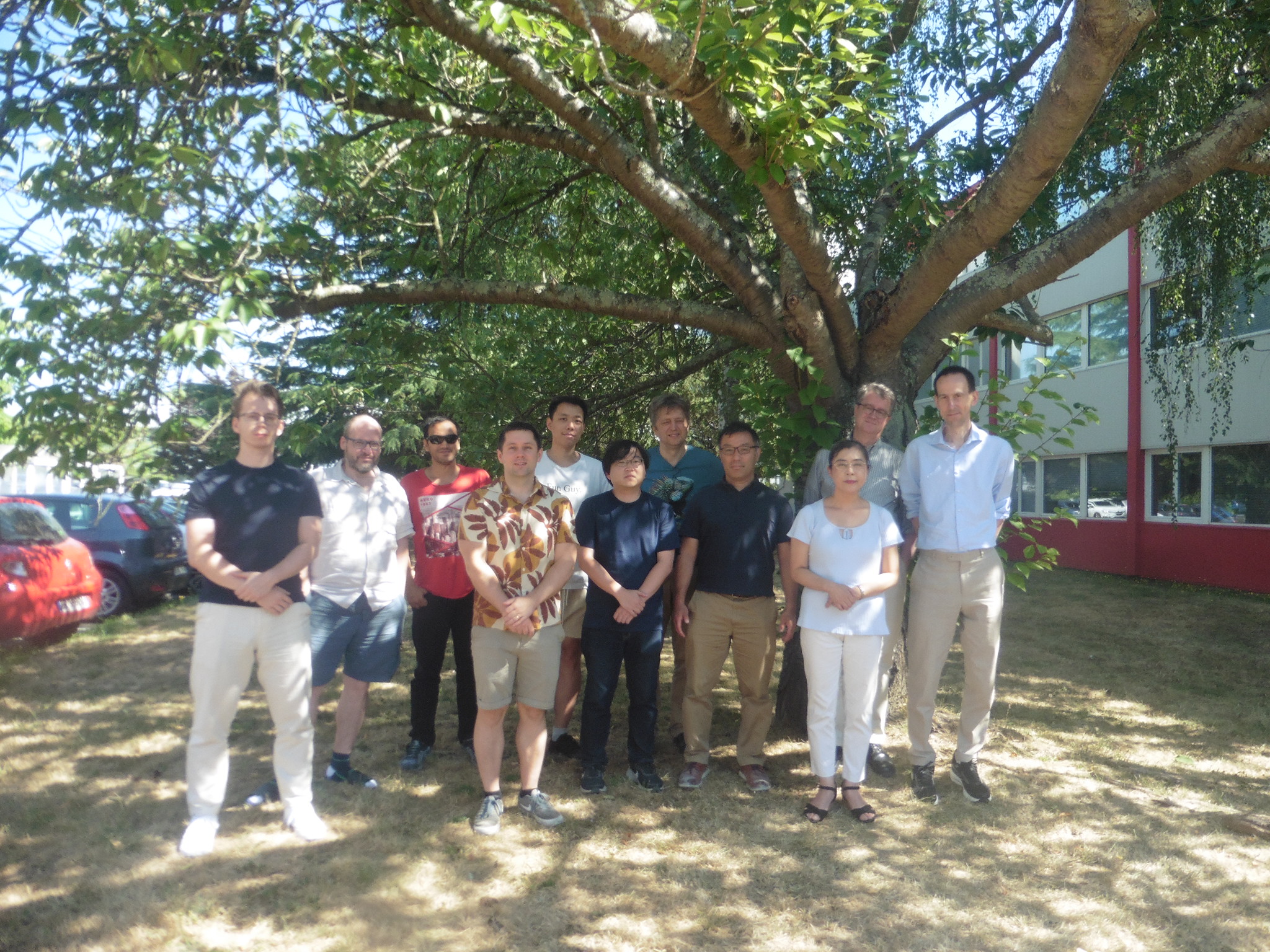
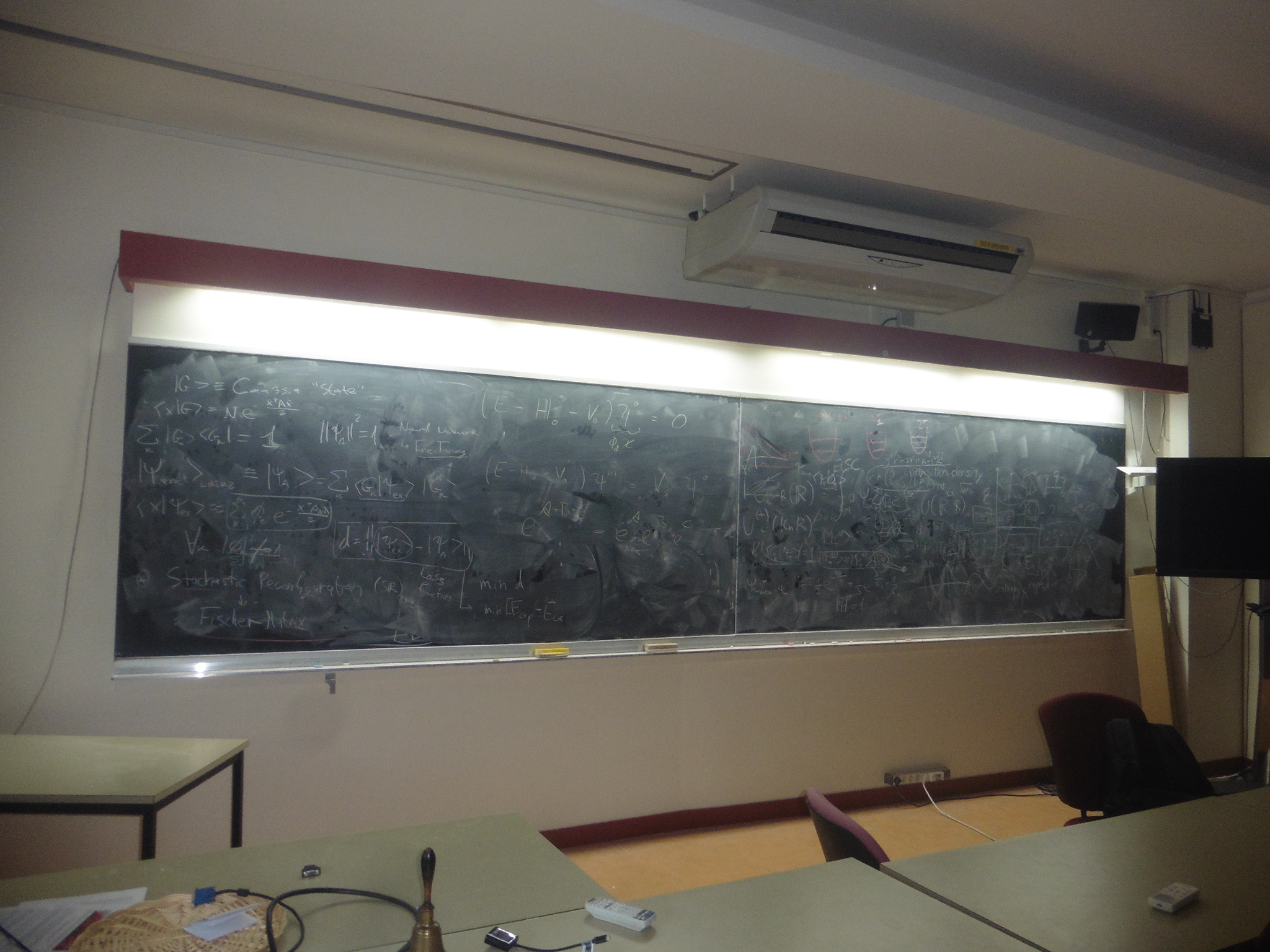
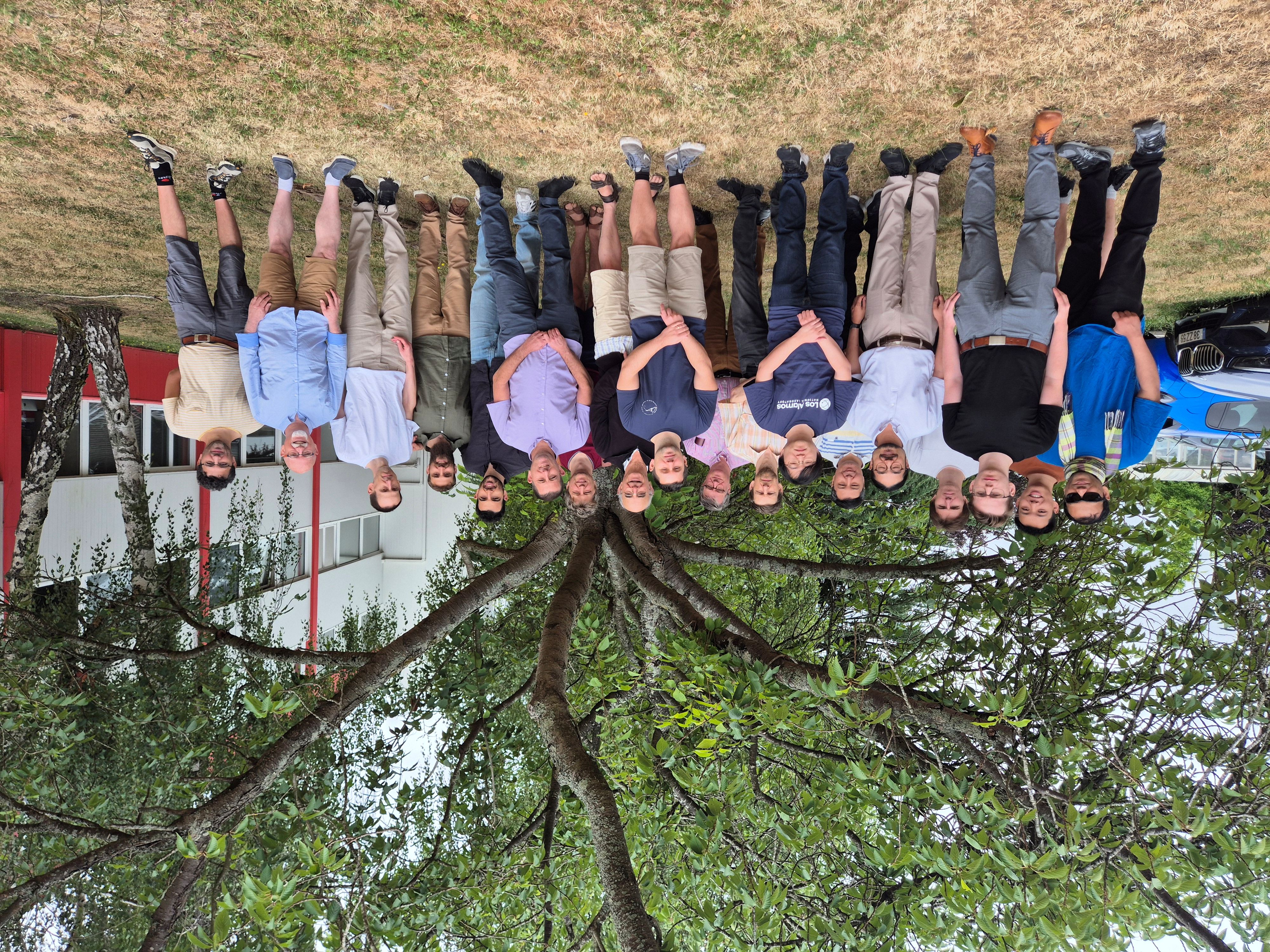
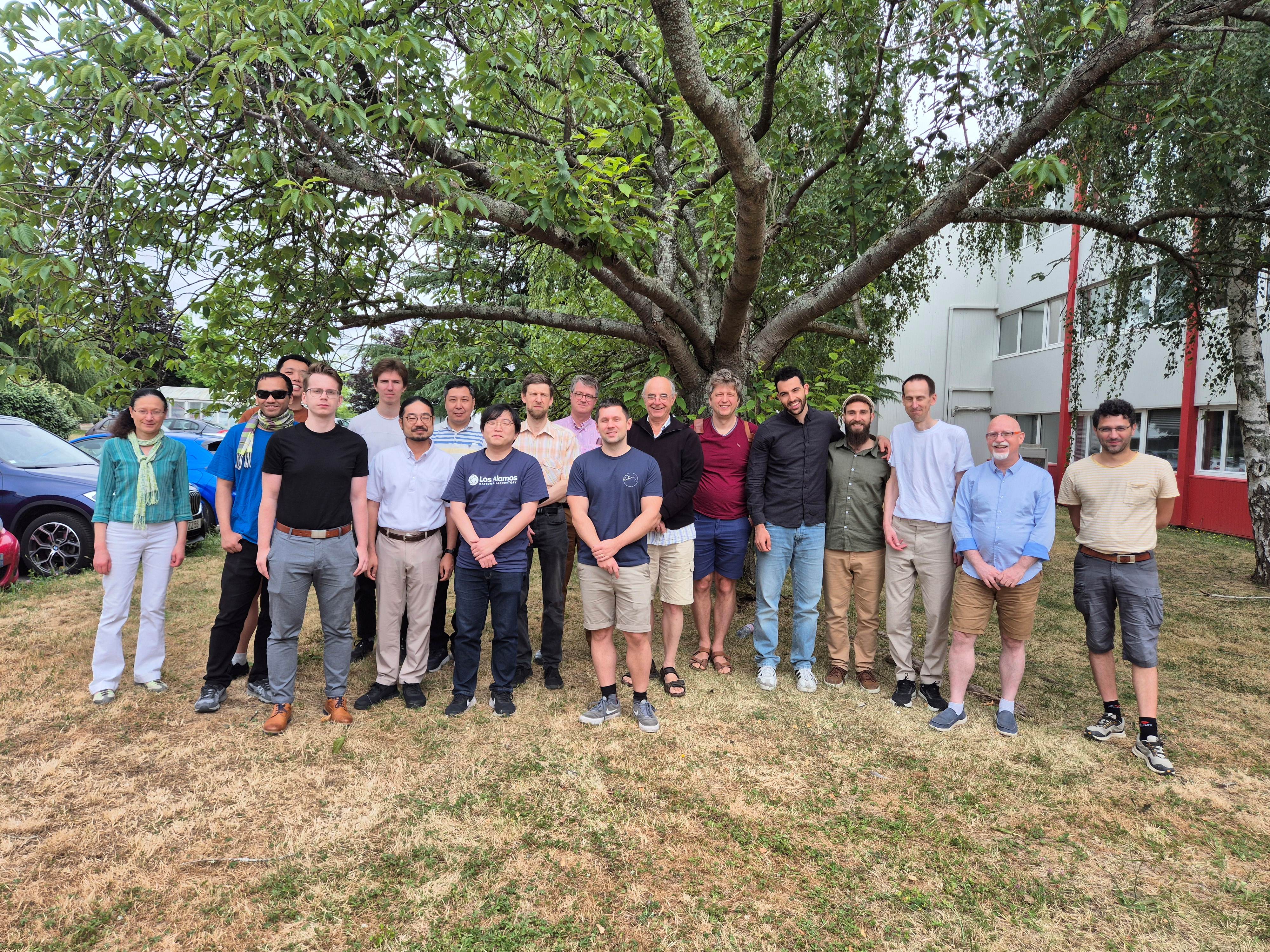
| GROUP Photos (click to enlarge) | |
|
10th July 2026 |
Room 135 - 6-10th July 2026 |
|
|
|
| Elm of the cherry Trees - 2nd July | Orme des Merisiers - 2nd July |
Création-contact Web ESNT : Valérie Lapoux
Retour accueil ESNT Back to the ESNT page

